

A framework for global leadershipThe Global Leader's
Compass™
Build credibility. Lead across cultures. Create lasting impact.
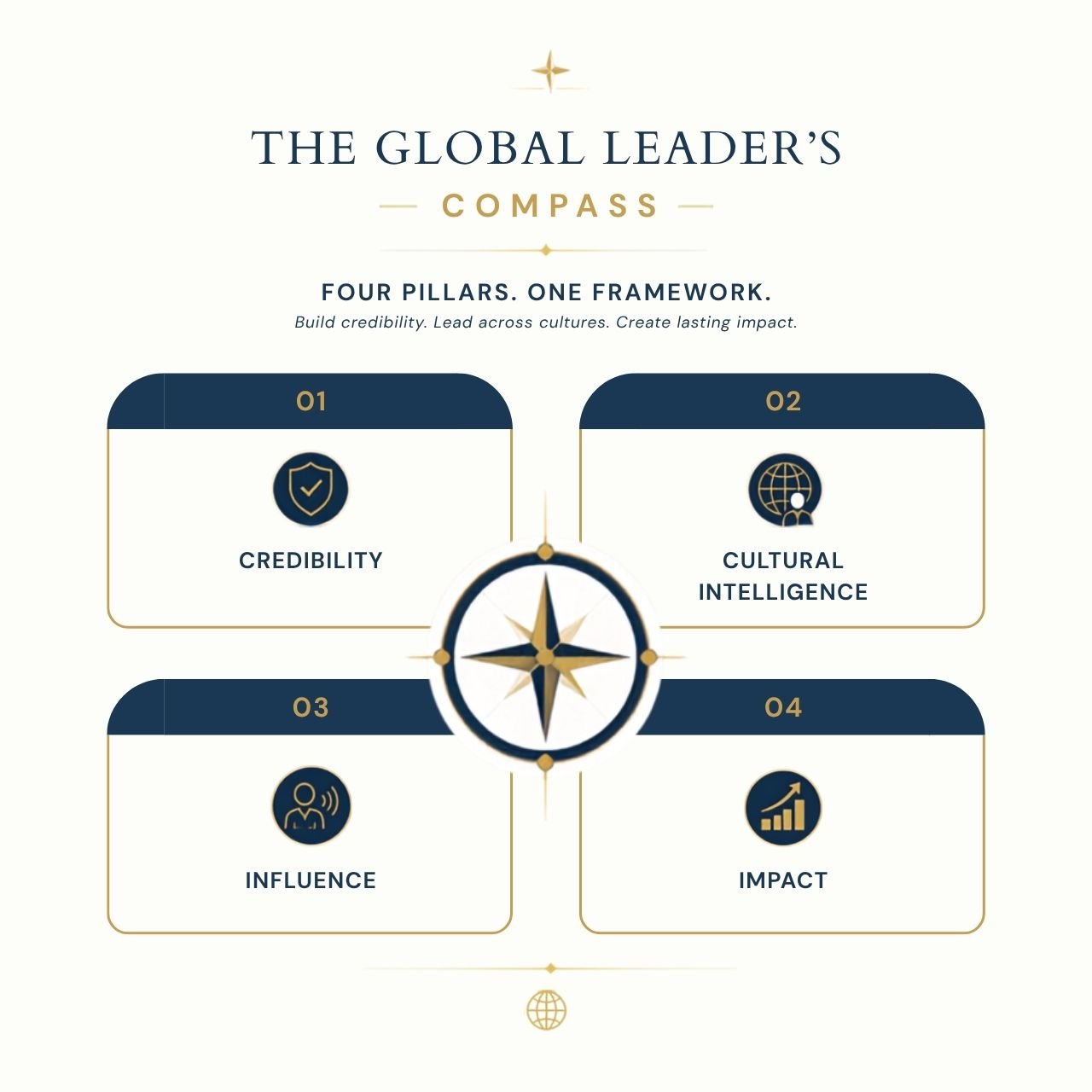
Leadership in global organizations means navigating different cultures, expectations, ways of working, and definitions of what effective leadership looks like. The Compass is a practical framework and assessment built around four capabilities that help you do that.
Five minutes. A clear read on where to focus next.
Great leadership adapts.
I have led teams in the Philippines who needed fun mixed into the work, and teams in North America who wanted the vision and then the room to go and execute it. Neither approach is wrong. They’re different expectations, and a leader who can’t read the difference will keep doing the right thing in the wrong place.
That’s what the Compass is for. Not a personality type, and not a scorecard on whether you’re a good leader. A way of seeing which capability your next level will test.
It's not about becoming someone else. It's about knowing what to adapt, what to strengthen, and what to stay grounded in.
Where it came fromFour things that kept coming up.
I got tired of being told I had great potential. It’s a lovely thing to hear and it tells you nothing. What does it mean, and how do I turn it into the role and the compensation I think the work is worth?
So I went backwards through my own career and asked a harder question. Not what I had achieved, but what had moved it. Where things accelerated, and where I stalled while doing good work.

Eva Aimable-Kolosko
Executive Coach & Career Advancement Strategist
Four things kept coming up.
It did not start as four. The fourth arrived later, out of conversations with leaders who were doing the others well and still not being picked, which is when it became clear that impact has to be understood by other people before it counts for anything.
The four capabilitiesFour capabilities for leading effectively in global organizations.
These four kept coming up. Not from research, but from looking back at my own progression and at the leaders I have watched move quickly, and the ones who stalled while doing good work.
01
CredibilityCan people trust your judgment?
Build the trust, judgment, and leadership presence that give others confidence in you.
What it meansYou either earn it or you don't have it. Credibility is what people conclude when you say you will show up and then you show up, when you stand for something consistently enough that others can predict it, and when the work holds up. It builds slowly and it’s spent quickly.
Where it usually breaksIt gets built with one audience and not the others. Plenty of leaders are trusted completely by their own team and are close to unknown to the executives who decide what happens to them next. Credibility has to exist with your peers, your team and the people above you, and those are three different audiences assessing you three different ways.
02
Cultural IntelligenceCan you read the context and adapt?
Recognize different expectations and ways of working, understand your own cultural lens, and adapt without losing who you are.
What it meansIQ, then emotional intelligence, then a third layer. Some of what you consider normal at work is built in from where you came from, whether you notice it or not. The distance between that and what your current environment expects is the gap, and the gap is where the work is.
Where it usually breaksPeople assume it only applies if they moved countries. You can be leading globally from one desk in Toronto, on a team made up of first and second generation immigrants, across three time zones. The second failure is subtler: hearing adaptation as an instruction to stop being yourself. You expand your leadership style. You don’t replace it.
03
InfluenceCan you move people and decisions forward?
Build alignment, shape decisions, and influence across functions, levels, cultures, and boundaries.
What it meansExecutive presence doesn’t mean being an executive. It means showing up consistently and professionally, in a meeting and at a work event alike. Influence then runs in three directions: across to your peers, down to your team, and up. Managing up is the one people neglect. If you know something your leader doesn’t, and their plan should change because of it, it’s your job to try to change their thinking.
Where it usually breaksIt gets treated as a function of title. The most influential person in an organization is often not a leader at all. Someone who has been there a long time, built a brand with their team, and who everyone checks with before they commit. If you’re driving change and you haven’t found that person, you’re not driving change.
04
ImpactCan people see and understand the value you're creating?
Connect your work to outcomes that matter and make the impact of your leadership visible.
What it meansYour leader should know what you contributed to a project, a plan or a result. Not because
visibility is the goal, but because work nobody can see can’t be rewarded, staffed or built
on. If a tree falls in the forest, nobody knows it happened.
Where it usually breaksPeople hear "communicate your impact" as "boast" and refuse on principle. It’s not boasting and it’s not bragging. It’s finding the balance where your contribution is understood while the team still gets its credit. Being humble doesn’t mean you cannot say what you achieved. It means knowing you didn’t do it alone, and saying that too.
Credibility builds confidence. Cultural Intelligence builds adaptability.
Influence creates movement. Impact makes leadership value visible.
The four are not independent.
They compound. Credibility is what makes people willing to be influenced by you. Influence is what lets you move a decision without the authority to make it. And when your impact is understood, it feeds straight back into credibility, which makes the next thing easier.
Which is why working on all four at once rarely helps. One of them is usually the constraint, and strengthening the others while that one stays weak produces little.
Find the one that is holding the other three back.
The Global Leader's Compass™ ScorecardWhere should you focus next?
Understanding the framework is one thing. Knowing how it applies to your leadership is where it becomes useful.
The Scorecard takes five minutes and gives you a read on all four capabilities: where you’re strong today, and where focus would change the most.
Five minutes.
Four capabilities.
Your own result.
Free. No preparation needed.
Two ways it gets put to work.
For Leaders
Individually, as the basis for the Leadership Strategy Sprint. You bring one challenge, decision or opportunity, and the Compass tells you which capability it turns on.
For Organizations
Inside organizations, as a shared language for leadership development. Workshops, coaching and programs are built on it, and it gives an organization visibility into which capabilities their leaders need to strengthen.
The BookThe longer version
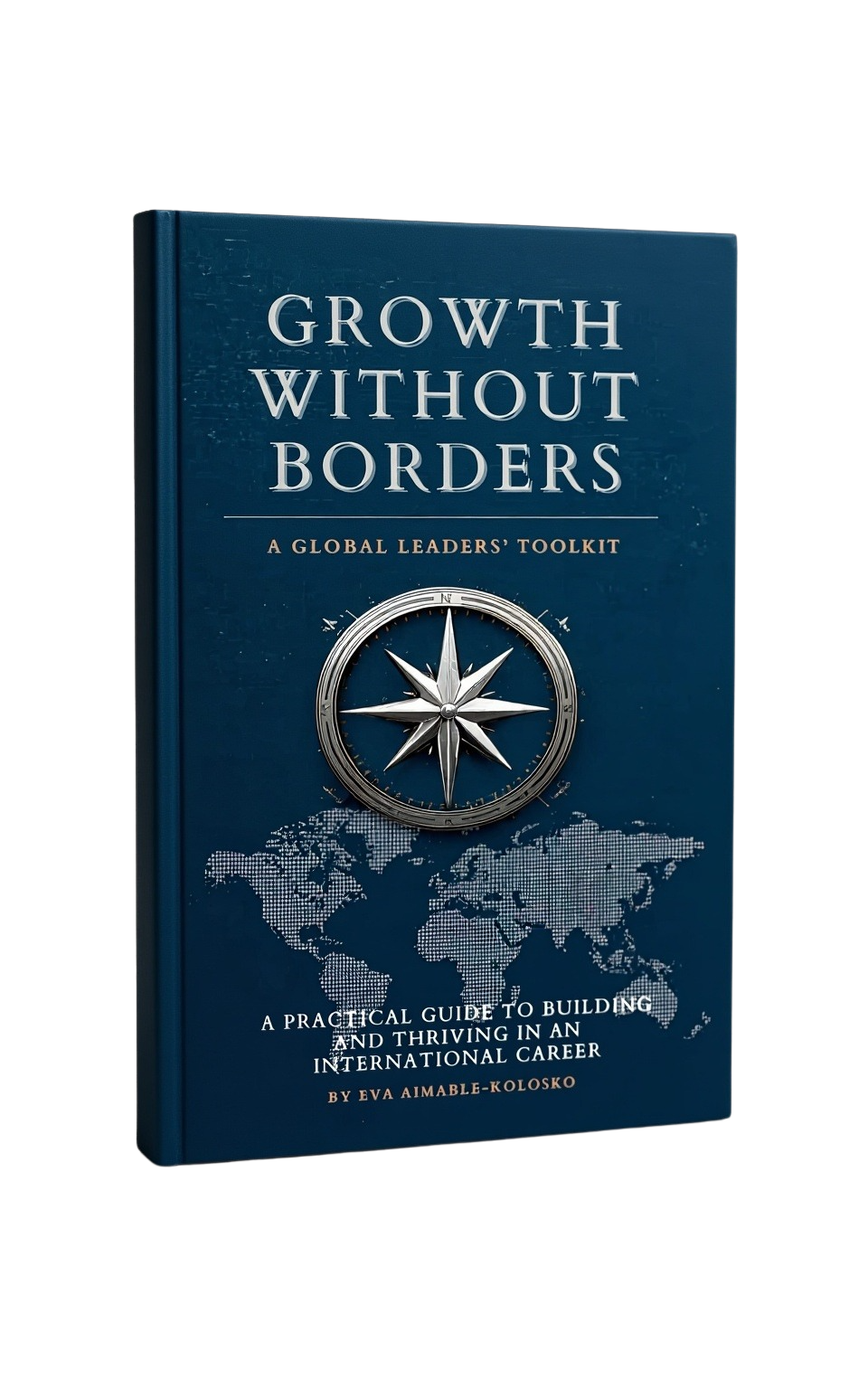
The Compass is one of the frameworks in Growth Without Borders: A Global Leaders' Toolkit, a practical guide to building and thriving in an international career. The book has the longer version: the mistakes, the misreadings, and the situations the framework came out of.
Start with where you stand.
You don’t need to work on all four. You need to know which one is costing you most right now.
Global. Grounded. Growing